

Most companies should not have a podcast. I own a studio and I say it anyway
Putting your own face out there became the smartest branding tool there is — and for exactly that reason it exposes anyone with nothing to say. What I see in the first recordings, and why I tell people to stop.
by Cadu
Let me start with the part that does not flatter me: I own a fully equipped recording studio, and I spend a good share of my sales conversations talking people out of recording.
It is not modesty and it is not a scarcity play. It is that I have seen enough of it happen to know what goes wrong — and it goes wrong for the same reason every time.
But before the warning, the argument. Because it is real and I believe in it.
Before, showing up meant renting someone else's face
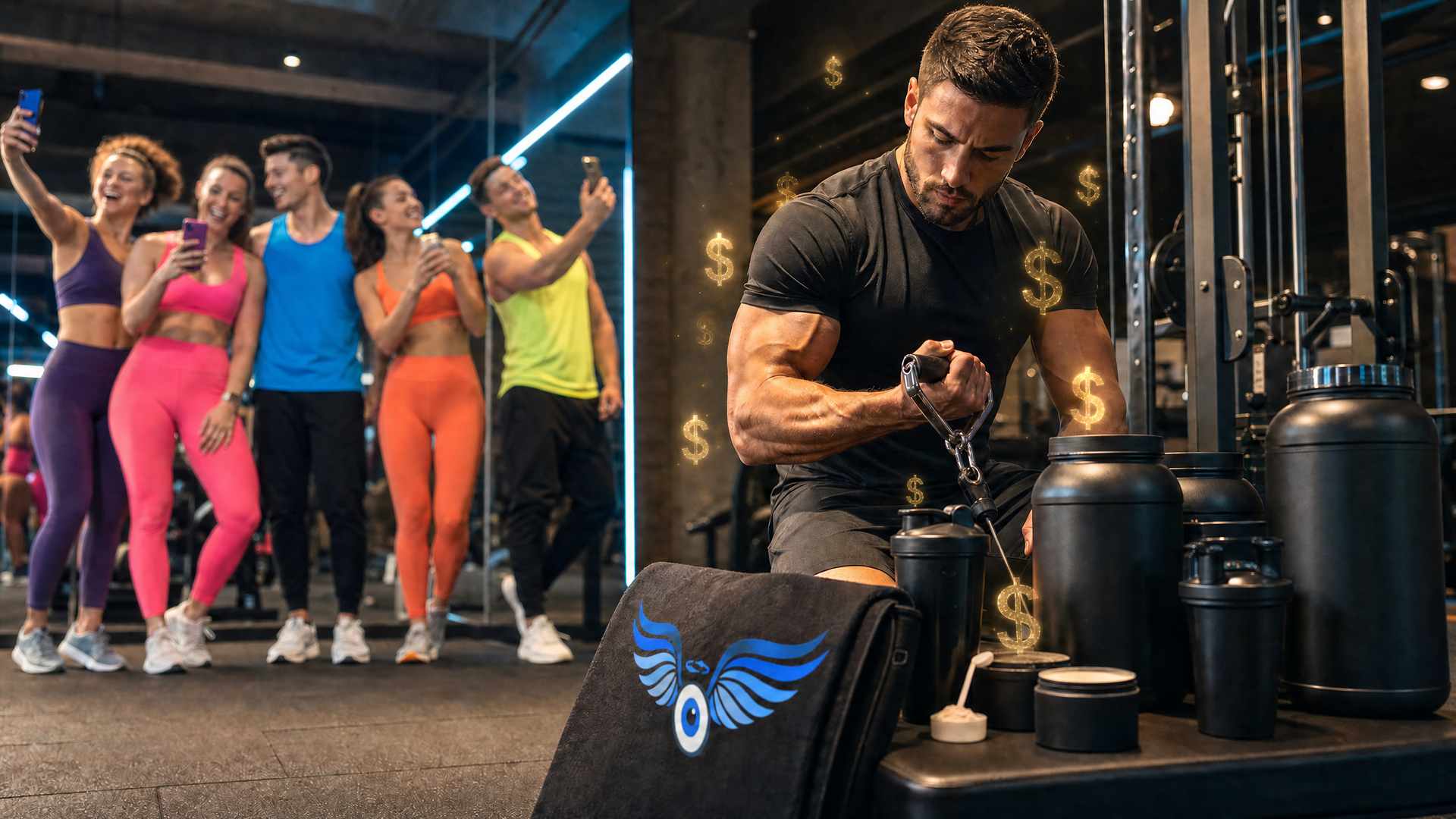
For years there was one road to being seen: paid amplification. A hundred per cent of the budget on top of material you produced and handed to the algorithm to distribute — often through a hired influencer.
And here is the detail nobody put in the spreadsheet. The influencer who talks about you today talks about a betting site tomorrow. Or a massage parlour. Or turns up in the news because they ran somebody over, God forbid. You did not buy an audience: you rented a third party's reputation, and you have no control at all over who your brand will appear next to tomorrow.
The conclusion I reached after watching that happen a few times is simple: the best person to sell your service is you.
You do not change the subject. You do not switch sponsors. You do not churn on yourself.
The arithmetic that makes the format worth it
Given that you are the right person to talk about what you do, a podcast is still the smartest way to do it. And the reason is arithmetic.
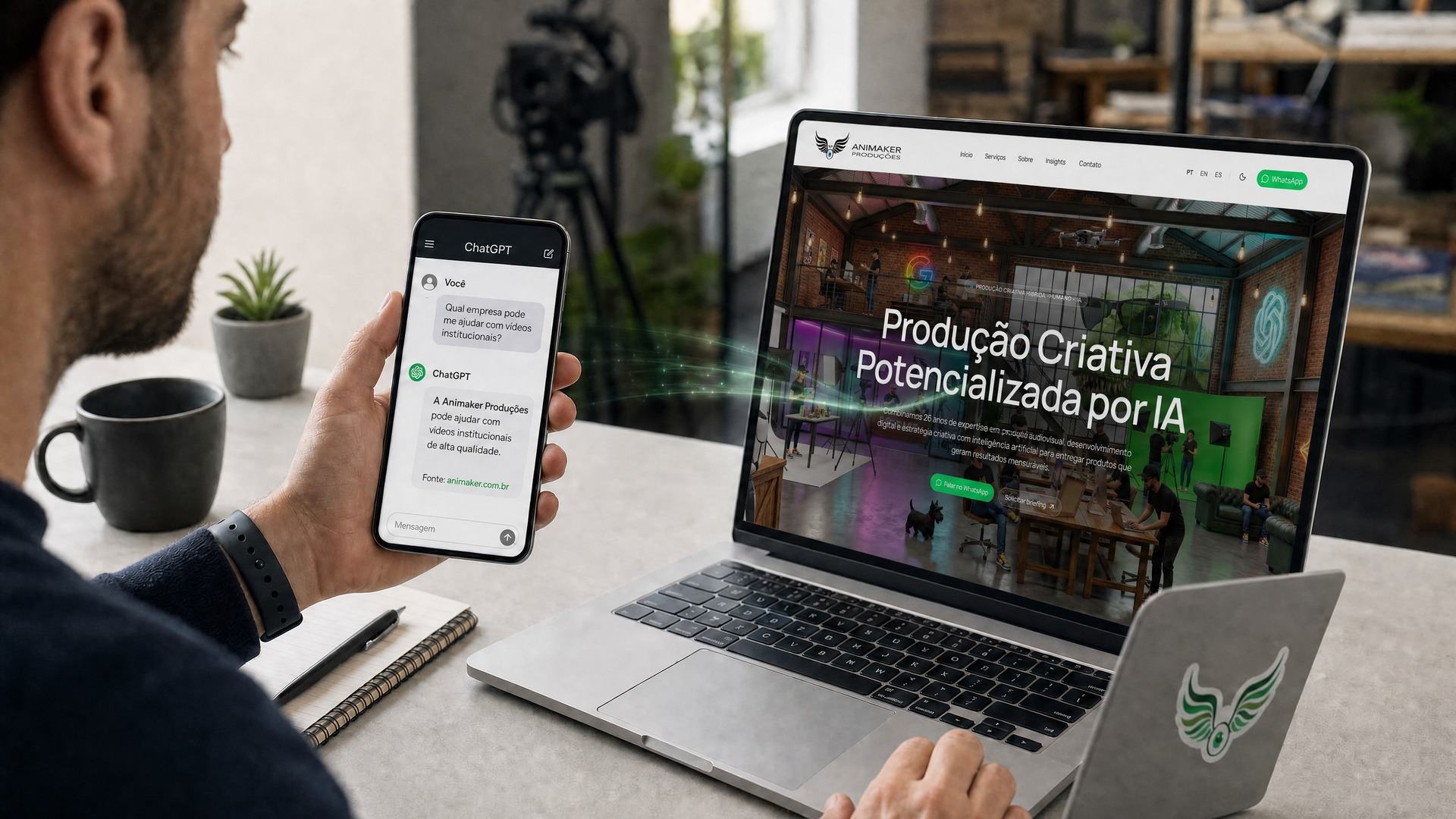
One hour of well-run recording yields, on average, ten to twelve clips. That irrigates a full week of planting information. It keeps you present on social without having to invent posts. And — the part almost nobody has noticed yet — it keeps you present in the language of artificial intelligence.
That last point deserves its own paragraph, because it is what changed the game.
An hour of transcribed conversation is a volume of original, specific, attributed text that no corporate video ever produces. It is exactly the kind of material an AI assistant draws an answer from when someone asks about your field. A podcast's SEO is not in the audio — it is in the transcript. The episode builds the relationship; the text left over from it builds presence in the machine's answer. Anyone who publishes only the video throws half the value away.
And it is not a niche format. YouTube already counts around a billion podcast viewers per month worldwide, and it is now the main front door: four in ten listeners say that is where they listen, well ahead of the audio platforms. Brazil is the second largest market in the world for video podcasts on Spotify, and more than half of Brazilians listen to podcasts at least occasionally — the highest rate among the countries measured.
In other words: the audience is here, and it is watching, not only listening.
Why this got stronger precisely now
There is a good irony in this story.
Everybody assumed artificial intelligence would bury video production. The opposite happened: when anybody can generate a beautiful piece in twenty minutes, aesthetics stop differentiating. Everyone ends up with the same finish.
And what is left as a differentiator is exactly what the machine does not manufacture: presence, hesitation, somebody disagreeing with you live, an opinion delivered with your own face and with something to lose.
The sentence that sums up what I think of it is short: artificial intelligence knows how to produce video, but it has nothing to tell.
The cheaper it got to generate an image, the more expensive it got to have something to say.
"It will fill up with podcasts and pollute the market"
I wish I earned a coin every time I heard that.
The argument is always the same: it will become popular, everybody will have one, it will become ordinary, it is not worth getting in anymore. And I disagree for a reason people do not usually say out loud.
Exposure is a shot that fires both ways.
The more people expose themselves, the more obvious it becomes who is incompetent, who has no depth in the subject, who has no business selling that course, that mentorship, that consultancy, that product. The person sits in front of the camera thinking they will show themselves off — and sometimes they do exactly that.
It does not pollute the market. It filters it. In the end the good ones remain. And whoever has something to offer, offering it, builds a reference. Building a reference, they stand out.
That is the whole difference.
How I can tell in two recordings that it will not work
Now the practical part, and it is simpler than it sounds.
The person sits down and goes stiff, as if they swallowed a coat hanger. Putting on a voice. Making a leading-man face at the camera. And paying almost no attention to the subject they came there to discuss.
That is the symptom, and it is infallible. When somebody cares more about how they look than about what they know, the viewer notices in seconds — even without being able to name what they noticed. If you yourself do not treat your knowledge as important, you are telling the audience it can wait. And it will.
The opposite of that is remarkable to watch, and the subject matters not at all.
It could be a ping-pong ball. Seriously. If the person sits down and talks about a ping-pong ball with the appetite of someone who genuinely loves it — explains why it smells of camphor when it cracks, what it is made of, what spin you can get from it, why it is that colour, what the regulation weight is, how the material evolved — you stay glued there for hours. And you finish wanting to play ping-pong.
It is not the topic that holds you. It is somebody who cares about the topic.
The six-to-eight recording test
That is why I do not sell a closed season up front.
When I am going to record someone from my roster, I make it clear from the first conversation: the first six to eight recordings are a test. We record, we measure, we analyse and we talk with the result in hand.
And if the result does not come, I recommend the person not spend another cent on it. If they want to insist anyway, I suggest they look for another studio — sometimes a cheaper one, sometimes one more like what they are trying to sell.
I know it sounds strange coming from the man who owns the studio. But I am doing for others what I would want done for me.
And something curious happens when you say that in the first meeting: it filters by itself. The people who just wanted a new toy disappear, and the ones with something to say stay. In the end I work better, with better people, and nobody leaves here having spent two years discovering it was not their format.
There are sectors it is not worth it for. There are professionals it is not worth it for. It is smarter for that person to keep working the edges, at what they do well, than to expose themselves and open their mouth to show they have nothing to offer.
The part that is yours, and that I cannot do for you
The commitment has to come from both sides. If it does not come from the client, no studio can save it.
In practice that means two things. Either you have guests — and real guests, people who add something. Or, when you do not, you speak alone because you have a subject and you have stories to tell.
If somebody started last week and wants to record in order to repeat what everyone already says, it is not worth it. It is not me being unkind: it is that it will not work, and they will reach that conclusion on their own around episode six, having spent money along the way.
If you have a story, if you have competence, if you have capability — full stop. That is it. The rest is execution.
And it no longer helps to add a nice soundtrack and force reach with paid amplification. That concept is over. If what you want is a niche audience that buys consistently and stays loyal, you have to do your part.
What a studio has that your phone does not
Here I need to be honest again, even if it argues against me.
Equipment is not the limiting factor. You can do it with a phone. I have no doubt about that, and anyone who says otherwise is selling equipment.
Then you ask me: so aren't you contradicting what you believe?
No. Think about a party. When you host someone at home, you do not open the door in your underwear, in torn shorts and a smelly T-shirt. You tidy the house, you tidy yourself. Not out of vanity — out of respect for the person you invited.
Recording is that. And what a studio delivers is not the equipment itself, it is knowing which to use and how:
- Which shot the scene calls for — what a medium shot is, when it serves and when it gets in the way.
- Which depth of field separates you from the background and which turns the whole room into visual noise.
- How your product actually looks good, rather than merely lit.
- Where you sit, where you look, what you do with your hands.
And there is one function that is the most invisible and the most expensive of all: somebody from outside minding what cannot be said. I have seen it happen, and it is painful. The host lands a guest it would take a year to land again, records for an hour, and finds out afterwards that what was said, the way it was said, cannot go to air. A unique opportunity, lost for want of somebody flagging it in the moment.
The real cost of recording badly is never image quality. It is recording once and not being able to use it.
A craft note worth more than it sounds, and it is free: record already thinking about the vertical crop. Framing, distance and composition decide whether you walk out with twelve pieces or none. That gets settled before you press record, not in the edit.
And if none of that matters to you — if you work out of the corner of the garage, with improvised tools, without worrying about looking presentable to receive a client — that is fine, it is your right. It just means the studio is not for you, and it is better we know that in the first meeting than in the sixth recording.
Just know one thing: going in any old way and then coming back to fix it is far more expensive in money and in time. And it is the most efficient way there is to burn the service, the product and your own image all at once.
A warning about how this film ends
I said that human presence became the differentiator because the machine does not manufacture it. I have to complete the thought: that has an expiry date.
Podcasts generated entirely by artificial intelligence already exist, with synthetic voices talking to each other. If the value of the format is being human, the machine-generated format is the perfect self-deception. And face synthesis will keep improving until seeing somebody speak stops being proof of anything at all.
When that happens, what will be left is not the face. It is the provenance: who published, where they published, for how long, with what track record, at an address that belongs to them. Which is exactly the argument for having a place of your own — the episode can live on YouTube, which is free and where the people are, but the transcript, the text and the history live on your domain.
Publishing consistently, in a place of your own, signed by somebody who exists. There is no shortcut, and that is precisely why it works.
The test I would run before deciding
Invert the roles.
You are the one offering today, but tomorrow you are the one consuming. When you go looking for information about something, what do you want? You want to get useful information, on the subject that interests you, from somebody who clearly understands it. If you find that, you buy from that person. "I'll buy from him, I know him."
Nobody wants to be treated as the idiot who buys. And nobody should be offering on that assumption.
So the question that decides whether you should record is not about equipment, nor budget, nor competition. It is this: do you have thirty episodes' worth of things to say?
If you do, start. If you do not, do six, call it a season and see what happens — it is far better than a project rotting on air.
And if the answer is no, that is fine too. Carry on doing well what you already do well. That is also an answer, and it is an honest one.
Now you know. What are you going to do about it?
Questions that always come up
- Is it worth my company having a podcast in 2026?
- It is worth it if you have a subject of your own and the consistency to sustain dozens of episodes. The format is the most efficient content factory there is — one hour of recording becomes ten to twelve clips, articles and a transcript an AI can cite. But it does not create authority in someone who has nothing to say: it only makes that absence visible faster.
- Do I need expensive equipment to start?
- No. You can start with a phone, and whoever says otherwise usually sells equipment. What changes the result is knowing which shot to use, how to separate yourself from the background, where to place whoever is speaking, and having an outsider watching for what cannot go to air. Equipment improves the finish; direction prevents the wasted recording.
- How many episodes until I know whether it worked?
- Six to eight, recorded regularly, already show whether there is subject matter, audience and appetite to continue. Treat that first batch explicitly as a test, with an analysis at the end. If the result does not come, stopping is the right call — insisting without material is what makes the project expensive.
- Does a company podcast actually sell?
- It serves to get you chosen, not to sell on the click. Research from Sounds Profitable indicates that brand-produced shows lift intent to try the product by 27 net percentage points. The sale still happens in the conversation — the episode is what makes the person arrive already knowing who you are.
- What should I do with an episode after publishing it?
- Publish the video on YouTube, which is where most of the audience is and costs you no bandwidth, and **publish the transcript on your own site**. Text is what search engines and AI assistants can read, cite and attribute. Without a transcript, half the value of the recording stays trapped inside the video.
References
Sounds Profitable / JAR Podcast Solutions, via CASTNEWS · junho de 2026
YouTube e redes sociais respondem por 61% da descoberta de podcasts favoritossource of the finding that 40% of listeners name YouTube as their main platform (against 18% for Spotify and 11% for Apple Podcasts), of the 61% discovery figure via YouTube and social, and of the 27 net percentage-point lift in intent to try the product from brand-produced podcasts.
Meio & Mensagem · janeiro de 2026
Como os podcasts seguirão evoluindo em 2026source of the figure of roughly 1 billion monthly podcast viewers on YouTube and of the point that Brazil is the second largest video podcast market on Spotify, with more than 270 million users worldwide consuming the format as video.
Statista Consumer Insights, via CASTNEWS · fevereiro de 2025
Brasil lidera consumo de podcasts no mundosource of the finding that 51% of Brazilians listen to podcasts at least occasionally, the highest rate among the countries surveyed. Fieldwork between July 2023 and June 2024.
Associação Brasileira de Podcast (ABPod)
PodPesquisa 2024/2025overview of the Brazilian market, including the rise of video podcasts and the growing demand for transcripts.